 Promethean
The Brief
Apple’s $599 MacBook Neo goes on general sale tomorrow, March 11, but online delivery estimates for new orders have slipped to as late as March 31 across all configurations after five days of pre-orders. The laptop — Apple’s cheapest ever, powered by an A18 Pro chip in four colour options — has drawn early review scores of 4.5/5 from multiple outlets, with TrendForce projecting 4–5 million units shipped this year.
The Report
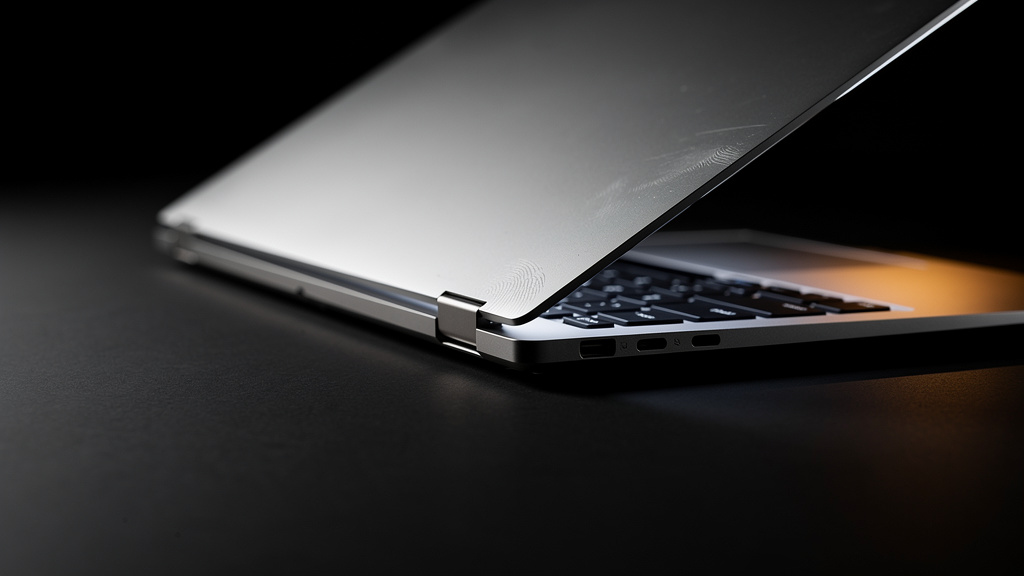
The MacBook Neo, announced March 4 and available for pre-order the same day, represents Apple’s first entry below $1,000 in the laptop market. The base model ships with an A18 Pro chip, 8GB of unified memory, 256GB of storage, and a 13-inch Liquid Retina display for $599 — or $499 for education buyers. A $699 tier adds 512GB storage and Touch ID. The machine weighs 2.7 pounds, runs fanless, and comes in Blush, Indigo, Silver, and Citrus.
Delivery windows have compressed steadily since pre-orders opened. Within 48 hours, the Blush 256GB configuration had slipped to March 16–23. By March 9, every configuration had blown past the launch date, with estimates ranging from March 17 to March 31. Blush and Citrus models have experienced the longest delays. Apple Store pickup remains available for some configurations on launch day, and resellers including Amazon and Walmart are carrying the device.
Reviews published today have been uniformly positive. Tom’s Hardware and Tom’s Guide both awarded 4.5 out of 5 stars. 9to5Mac’s Chance Miller called it “an incredible value — no asterisks required,” noting six days of use without hitting a performance ceiling. Reviewers consistently flagged the same compromises: no backlit keyboard, no Thunderbolt, a 1080p webcam without Centre Stage, and the 8GB RAM cap that cannot be upgraded. The absence of keyboard backlighting drew the sharpest criticism. Miller called it below “table stakes for a laptop in 2026.”
The A18 Pro — the first iPhone-class chip used in a Mac — delivers single-core benchmark performance 47 percent faster than the M1 MacBook Air, though multi-core and GPU scores trail the current M4 Air by wide margins. TSMC supply constraints on the newer A19 Pro node forced Apple onto the older chip, a limitation CEO Tim Cook has acknowledged also affected iPhone 17 Pro availability.
Wall Street’s initial response was muted. Apple shares rose 0.1 percent to $263.94 the day of the announcement, with analysts noting margin concerns amid a global memory chip shortage. IDC’s Francisco Jeronimo called it “one of the most important announcements for Apple in the Mac product line,” while Wedbush’s Daniel Ives raised his price target to $350, citing the device as part of an “imminent wave of artificial intelligence-led upgrades.” TrendForce projects the Neo could push Apple’s notebook shipments up 7.7 percent year-over-year, lifting macOS market share to 13.2 percent.
The education market remains contested. At $499, the Neo still costs roughly double a typical Chromebook, and Google’s management tools retain a significant deployment advantage across the 93 percent of U.S. school districts that plan to purchase Chromebooks this year. Apple’s approach appears to bypass institutional procurement entirely, targeting individual students and parents in what Six Colors described as a “Trojan horse” consumer strategy.
The Angle
The interesting number is not $599. It is $400 — the gap between Apple’s cheapest laptop a year ago and its cheapest laptop now. That kind of price movement is not a product decision. It is a territory claim. Apple has spent two decades building a premium ecosystem and charging accordingly. The Neo does not abandon that model. It extends the perimeter. The device itself is a delivery mechanism for the ecosystem — iCloud, Apple Intelligence, the App Store, the services revenue that already generates more than the Mac line.
The 8GB RAM limitation tells a quieter story. TrendForce’s reporting makes clear this is not a design choice so much as a constraint imposed by TSMC’s packaging architecture and node availability. Apple built the most attractive laptop it could within the bounds of what its supply chain would actually produce in volume at this price. The sell-out pattern suggests that for the buyer this machine is aimed at — someone choosing between a $500 Windows laptop and their first Mac — the constraint is invisible. They will not notice what they cannot compare against.
What Wall Street noticed, correctly, is that margin compression on hardware is the wrong metric. The Neo’s function is not to be profitable per unit in isolation. It is to move the install-base needle in segments Apple has never seriously contested. The flat stock price reflects a market that hasn’t decided whether this is a growth catalyst or a margin trap. The answer probably depends on something no one is measuring yet: how many of those 4–5 million buyers become services subscribers within 18 months. That is the number Apple is actually optimising for. The laptop is the packaging.