 Promethean
The Brief
NASA engineers have repaired a helium flow seal obstruction on the Artemis II Space Launch System rocket and are preparing to roll it back to Launch Pad 39B later this month, targeting an April 1 launch for the 10-day crewed mission. If it flies, Artemis II will send four astronauts around the Moon — the first crewed lunar voyage since Apollo 17 in December 1972.
The Report
NASA has cleared a technical obstacle to Artemis II after engineers repaired a seal in the quick disconnect mechanism that was obstructing helium flow to the rocket’s upper stage. The issue was identified following a wet dress rehearsal on February 21, prompting the agency to roll the 322-foot Space Launch System rocket and Orion spacecraft back to the Vehicle Assembly Building on February 25.
Technicians disassembled the quick disconnect, reseated the seal, and validated the fix by running reduced helium flow rates through the system. With the obstruction confirmed clear, teams have turned to additional maintenance work while the rocket remains in the building — installing new flight termination system batteries, replacing flight batteries across the upper stage, core stage, and solid rocket boosters, and beginning replacement of a seal on the core stage liquid oxygen feed system on March 2.
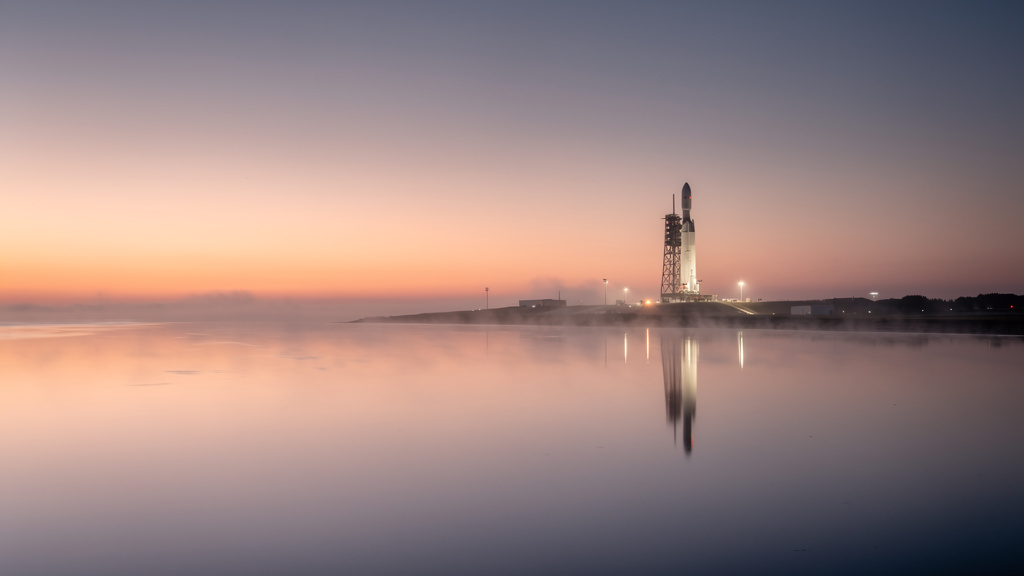
Rollout to Launch Pad 39B at Kennedy Space Center is projected for around March 19. NASA is targeting an April 1 opening of the launch window, with additional available dates on April 3, 4, 5, 6, and 30.
The crew of four — NASA astronauts Reid Wiseman, Victor Glover, and Christina Koch, alongside Canadian Space Agency astronaut Jeremy Hansen — will fly a free-return trajectory around the Moon over approximately 10 days before splashing down in the Pacific Ocean off San Diego. The mission will carry several firsts: Glover will become the first person of colour to reach the Moon’s vicinity, Koch the first woman, and Hansen the first non-American to travel to deep space.
Artemis II builds on the uncrewed Artemis I test flight of 2022 and is intended to validate Orion’s life-support systems and deep-space navigation ahead of Artemis III, a crewed lunar landing now targeted for mid-2027. The programme has faced persistent schedule pressure — Artemis II was originally planned years earlier and has been delayed at least three times — alongside cost scrutiny that saw the Trump administration propose cancelling SLS after Artemis III, before Congress secured funding for two further missions through fiscal year 2029.
NASA’s Office of Inspector General has estimated the programme’s cumulative cost at nearly $93 billion through 2025, with each of the first four SLS flights running approximately $4.1 billion. The last time astronauts travelled to the Moon, Eugene Cernan and Harrison Schmitt walked on its surface during Apollo 17 — fifty-three years and three months ago.
The Angle
Fifty-three years is not a gap. It is the length of time it took the most capable civilisation in history to repeat something it had already done. The Apollo programme sent humans to the Moon in eight years from a standing start. Artemis has taken longer than that just to fly an uncrewed test and schedule the crewed follow-up. The technical achievement, when it happens, will be real. But the timeline tells a story about what a society optimised for risk-managed procurement looks like when measured against one optimised for reach.
The helium seal repair is a useful emblem. A seal in a quick disconnect — a component whose function is to connect and release — obstructed the flow and grounded the rocket. The fix took days, not months. The issue was mechanical, contained, solvable. What is harder to repair is the structural condition that made a $4.1 billion-per-launch architecture the only path back to the Moon in an era when private vehicles are landing boosters on drone ships for a fraction of the cost. SLS exists because it was designed to exist — a programme built from Shuttle-era contracts, workforce commitments, and congressional district logic as much as from engineering requirements. It works. Whether it is the right tool for sustaining a permanent human presence beyond Earth is a question the programme was never designed to answer.
The crew selections tell a quieter and more consequential story. The first woman, the first person of colour, the first non-American to reach deep space — these are markers of a species that has widened the circle of who gets to go. That widening matters not as symbolism but as infrastructure. A civilisation that restricts its most demanding work to a narrow demographic is a civilisation operating below capacity. Artemis II’s crew manifest is, in functional terms, a capacity upgrade.
The distance between April’s flyby and mid-2027’s landing attempt is where the programme’s real test begins. Artemis I revealed heat shield damage that has yet to be fully resolved for landing-speed re-entry. The budget remains contested. The timeline has slipped before and the conditions for further slippage have not been removed. What has changed is that the gap between ambition and capability — the gap that turned fifty-three years into a number anyone had to write down — is now short enough to close within a single administration’s term. Whether it closes will depend less on seals and helium flow than on whether the species that built the rocket still considers the Moon a destination worth the cost of reaching it.
The last astronaut to leave the lunar surface scratched his daughter’s initials in the dust and said he hoped it would not be long before someone returned. It has been longer than a human lifetime in some countries. The rocket is being prepared. The question it cannot answer is why it took this long.
The first crewed vehicle pointed at the Moon in half a century is being readied not at the edge of capability, but at the edge of willingness.