 Promethean
The Brief
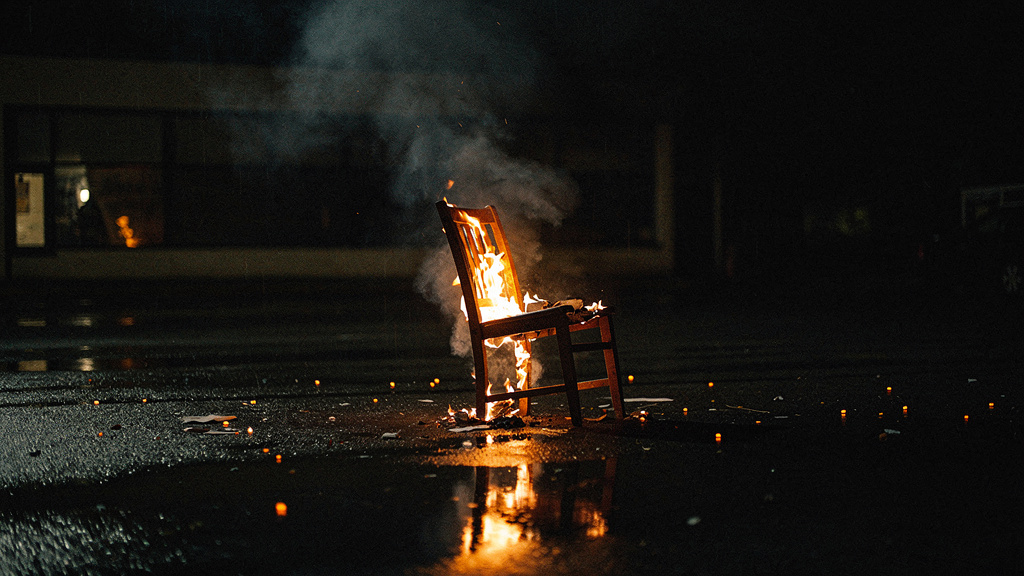
Protesters in Morón, central Cuba, broke into the local Communist Party headquarters on Friday night, dragged furniture into the street and set it ablaze after days without electricity — the most significant act of political destruction since the July 2021 uprising. Five people were arrested, and disputed reports of gunfire and at least one shooting injury have been denied by state media, which attributed one hospitalisation to intoxication.
The Report
A demonstration against power cuts and food shortages in Morón, a city of roughly 70,000 in Ciego de Ávila province, escalated from peaceful protest to property destruction in the early hours of Saturday morning. Residents who had gathered to demand electricity entered the local Communist Party headquarters, stoned the building’s entrance, and burned reception furniture in the street. A pharmacy and state-run shop sustained additional damage.
The incident marks a dramatic escalation in a wave of nationwide unrest now stretching into its second week. Across Cuba, residents have staged nightly cacerolazos — the Latin American tradition of banging pots and pans in protest — in response to blackouts lasting up to twenty or thirty hours in some areas. University of Havana students held a sit-in on March 10 after classes were suspended because teachers and students could not reach campus without functioning public transport. In Santiago de Cuba, residents took to the streets shouting “Down with the dictatorship!” in the early hours of Sunday.
Cuba’s interior ministry opened an investigation into the Morón incident and announced five arrests. State-run newspaper Invasor described the violence as the work of “a smaller group” within an otherwise legitimate gathering. Human rights group Justicia11 and multiple media outlets reported gunfire and at least one person shot in the leg, citing video footage and witness accounts. State outlet Vanguardia de Cuba denied anyone sustained gunshot wounds, accusing external media of “manipulation” and “sowing fear.”
President Miguel Díaz-Canel responded with an unusual calibration of acknowledgement and warning. “It’s understandable that the prolonged blackouts cause distress,” he said, calling complaints “legitimate” — language markedly softer than his response to the July 2021 protests, when he called on supporters to physically confront demonstrators. He added that “there would be no impunity for vandalism and violence.”
The crisis has its immediate roots in the January 3 capture of Venezuelan President Nicolás Maduro by U.S. forces — an operation during which 32 Cuban military officers were killed — which severed Cuba’s primary oil supply. On January 29, President Trump signed an executive order threatening economic penalties against any nation supplying Cuba with petroleum, effectively blockading the island’s fuel imports. Díaz-Canel confirmed on Friday that no petroleum shipments had arrived in three months, and that his government had opened talks with Washington — the first public acknowledgement of such discussions. Cuba’s largest power plant, the Antonio Guiteras facility, suffered a boiler failure on March 4 that knocked it offline for four days. On an average day, the grid meets only fifty to seventy percent of demand, and the entire system has collapsed four times in the past six months.
The regime released 51 prisoners on March 13 in a Vatican-brokered deal widely interpreted as a goodwill gesture toward Washington. Prisoners Defenders, a nonprofit, estimates 1,214 political prisoners remain in Cuban custody.
The Angle
Díaz-Canel’s choice of register is the detail worth watching. In 2021, facing similar unrest, he went on television and told communists to attack protesters in the streets. In 2026, he called their complaints “legitimate.” That is not a change in values. It is a change in leverage.
A government that can keep the lights on can afford to call its critics criminals. A government that has not received a single oil shipment in three months, whose largest power plant failed on live television, and whose grid collapses with the regularity of a seasonal weather pattern cannot. The conciliatory language, the prisoner release, the confirmed talks with Washington — these are not signs of reform. They are the specific behaviours of a system running out of the material capacity to maintain its own authority. The regime is not softening. It is calculating what it can still afford to enforce.
Morón is instructive for a second reason. It was also a flashpoint in July 2021. That earlier wave of protests — the largest since 1959 — was met with mass arrests, over 1,500 detentions, and the kind of comprehensive crackdown that only a functioning security apparatus can execute. The question raised by Friday’s events is not whether the regime is willing to do the same. It is whether it can. Police vehicles still have fuel. Ambulances, reportedly, do not. The selectivity of that allocation tells you what a regime prioritises when it can no longer prioritise everything.
The U.S. posture adds a layer of deliberate asymmetry. Trump’s executive order did not merely sanction Cuba — it threatened penalties against any third party willing to supply it, converting a bilateral dispute into an isolation mechanism. Canada and Mexico have sent humanitarian aid. Russia has urged restraint. None of them have sent oil. The practical effect is a population of eleven million people serving as the dependent variable in a negotiation between a government that cannot feed them and a foreign power that has decided their hunger is useful leverage. Díaz-Canel says talks are in “initial phases.” Trump says Cuba is in “its last moments of life.” Both statements can be true simultaneously, which is the problem.
What Morón demonstrated on Friday night is what happens when a population’s threshold for risk drops below the regime’s capacity to impose consequences. A thousand people in the street, furniture burning outside the Party headquarters, chants of “Libertad” audible on phone cameras that the regime no longer has the electricity to monitor — this is not revolution. It is the arithmetic of a system whose inputs no longer cover its outputs. The political question and the engineering question have become the same question, and the answer to both is measured in barrels per day.
The infrastructure that kept one of the Western Hemisphere’s last single-party states functioning was never ideological. It was 30,000 barrels of Venezuelan oil a day — and that supply line no longer exists.