 Promethean
The Brief
The Bureau of Labor Statistics releases the Consumer Price Index for February at 8:30 a.m. ET, with economists forecasting headline inflation between 2.4% and 2.5% year-over-year. The data was collected before joint U.S.-Israeli strikes on Iran sent crude oil past $100 a barrel and will not reflect the energy price surge now working through the economy.
The Report
Economists expect February’s CPI to show headline inflation holding near 2.5% year-over-year, a modest uptick from January’s 2.4% reading but still below the trailing twelve-month average of 2.6%. The FactSet median estimate, drawn from a narrow range of 2.40% to 2.60%, reflects unusual forecaster consensus. Core CPI, which strips out food and energy, is projected at 2.5% year-over-year. The Cleveland Fed’s nowcast model puts the headline figure at 2.41%.
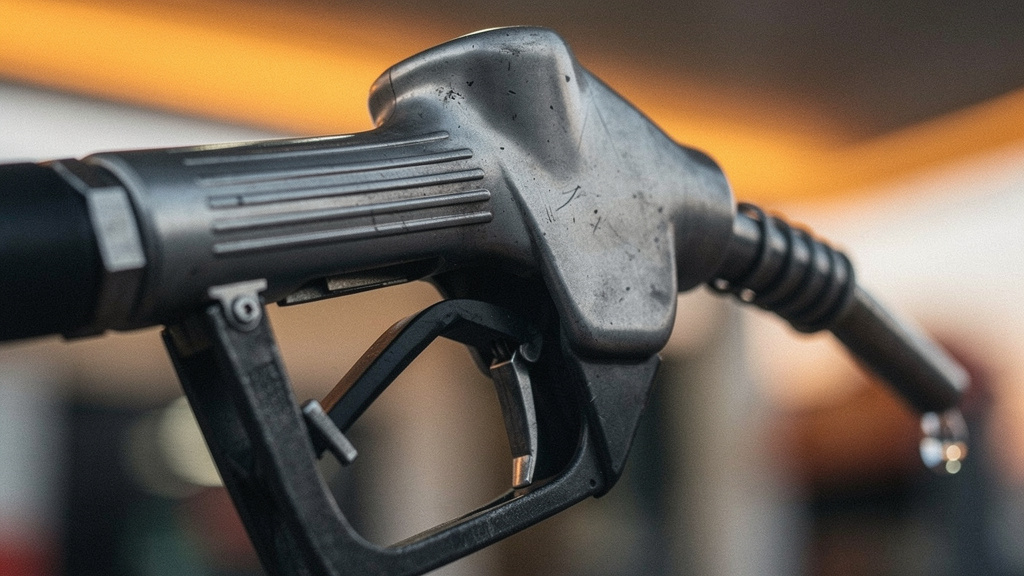
The report arrives into an economic landscape that has shifted so dramatically since the data was gathered that multiple analysts have questioned its relevance. On February 28, the United States and Israel launched joint airstrikes on Iran, including a decapitation strike that killed Supreme Leader Ali Khamenei. In the days that followed, Iran effectively closed the Strait of Hormuz — the passage for roughly one-fifth of global crude oil and liquefied natural gas — and Iraqi oil output collapsed by 70%. Brent crude peaked at $119.50 a barrel, its highest level since 2022. The average U.S. gasoline price has climbed from $2.98 to $3.50 a gallon, with diesel up 23% to $4.65.
The forward-looking inflation picture has deteriorated sharply. Morgan Stanley Research estimates that a 10% oil price rise from a supply shock adds approximately 0.35 percentage points to headline CPI over three months. Gregory Daco, chief economist at EY-Parthenon, projected that the gasoline surge alone could push monthly inflation as high as 1% in March — the steepest monthly increase in four years — with annual inflation approaching 3%. JPMorgan economists have offered similar forecasts. One-year inflation expectations, which had been easing through February to 3.5% in the University of Michigan survey, spiked to 4.2% after the conflict began.
The Federal Reserve, which holds rates at 3.50%–3.75% and meets again on March 17–18, faces a deepening policy split. Governor Stephen Miran argued last week that sustained labour market weakness — including February’s loss of 92,000 jobs against expectations of a 55,000 gain — requires at least four additional quarter-point cuts this year. Governor Beth Hammack countered that the war could lift inflation while depressing demand, and that cuts should remain “on hold for quite some time.” The CME FedWatch tool shows a 97.4% probability of no rate change at next week’s meeting.
The February jobs report compounded the uncertainty. Nonfarm payrolls fell by 92,000, the unemployment rate rose to 4.4%, and the average duration of unemployment reached 25.7 weeks — the longest since December 2021. Average hourly earnings, however, rose 0.4% for the month and 3.8% year-over-year, suggesting wage pressures have not yet eased.
Today’s CPI number, whatever it shows, will describe a country that no longer exists in its current economic form. The Cleveland Fed’s March nowcast already registers 2.61% year-over-year — and that figure incorporates only the earliest edge of the energy passthrough.
The Angle
The value of today’s number is not what it says about February. It is what it establishes as a baseline — the last measurement of an economy operating under conditions that ended eleven days ago. The distinction matters because the argument about what comes next depends entirely on where you mark the starting point.
If February confirms that inflation was genuinely cooling — shelter decelerating, grocery prices stabilising, core measures drifting toward the Fed’s target — then the coming months of energy-driven price increases can be framed as an external shock imposed on an otherwise recovering economy. That framing gives the Fed room. Supply shocks, in the institutional vocabulary, are temporary. You can look through them. If, on the other hand, the February data shows price pressures were already rebuilding before crude moved — services inflation sticky, wages running ahead of productivity — then what arrives through the energy channel is accelerant on an existing fire, and the policy options narrow considerably.
The Fed’s internal split maps onto this question precisely. Miran is betting on the first reading: a labour market in enough distress to justify cutting through the noise. Hammack is pricing in the second: an inflationary environment where adding monetary fuel is reckless regardless of the employment picture. Both positions are internally coherent. Both cannot be right simultaneously. And the institution designed to choose between them has a 97.4% chance of choosing neither next week.
The deeper problem is structural. Every major oil supply shock in the postwar period — 1973, 1979, 2008, 2022 — has produced the same pattern: an initial spike dismissed as temporary, a secondary transmission through logistics and food costs that proves stickier than projected, and a central bank caught between the inflation it can measure and the contraction it can see coming. The question has never been whether this pattern repeats. It is how long the gap lasts between the shock and the institutional acknowledgement that the old map no longer applies. Today’s CPI is the old map, printed and bound. The terrain has already moved.