 Promethean
The Brief
The International Energy Agency on Wednesday authorized the release of 400 million barrels from member-nation strategic reserves — the largest coordinated release in the agency’s 52-year history — after the Iran conflict reduced Strait of Hormuz traffic to fewer than seven ships per day and pushed Brent crude above $110. The unanimous decision by all 32 IEA members more than doubles the previous record release of 182.7 million barrels during the 2022 Ukraine crisis.
The Report
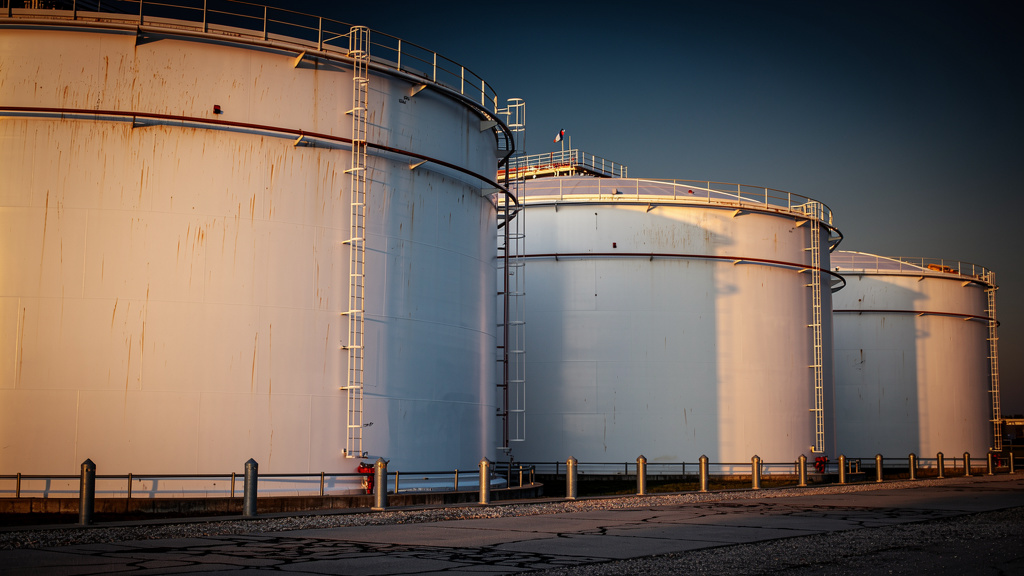
The IEA’s 32 member nations voted unanimously to release 400 million barrels of oil from emergency stockpiles, a direct response to supply disruptions triggered by the U.S.-Israeli military campaign in Iran that began on February 28. The release — the sixth in IEA history and by far the largest — draws from public reserves exceeding 1.2 billion barrels and an additional 600 million barrels of industry stocks held under government obligation.
The Strait of Hormuz, through which roughly 20 million barrels of crude and petroleum products pass daily — approximately 25 percent of worldwide seaborne oil trade — has been effectively closed to commercial tanker traffic since early March. Iran’s enforcement has relied not on a conventional naval blockade but on drone attacks and military threats that prompted insurers to withdraw coverage for vessels transiting the waterway. Where more than 100 ships per day once passed, only seven have transited since March 8. Over 150 tankers sit anchored outside the strait. Iraq and Kuwait have begun halting production in some fields, their storage tanks full with no route to export.
Brent crude, which sat near $70 per barrel before the conflict, surged past $119 on Sunday before falling to below $87 on Tuesday following reports of an imminent release. After the formal IEA announcement on Wednesday, prices climbed back above $90. U.S. retail gasoline has risen roughly 50 cents to a national average of $3.57 per gallon, with California stations averaging $5.34.
Market reaction to the announcement was sceptical. JPMorgan analysts noted that historical emergency releases have peaked at approximately 1.4 million barrels per day — a rate that “would not materially ease a 16 million barrels per day shortfall.” Macquarie analysts calculated the total release equals roughly four days of global production or 20 days of Hormuz flow, adding: “If that doesn’t sound like much, it isn’t.” U.S. Energy Department deliveries typically require 13 days to begin after a presidential order, with additional shipping time to consumers.
Individual country commitments have begun to surface. South Korea pledged 22.46 million barrels, the United Kingdom 13.5 million, and Germany requested the release of 2.64 million tons. Japan will begin releases on Monday. Germany and Austria have introduced fuel price increase limits at petrol stations.
IEA Executive Director Fatih Birol called the action “unprecedented in size” but was direct about its limitations. “The most important thing for a return to stable flows of oil and gas is the resumption of transit through the Strait of Hormuz,” he said. The U.S. administration has framed the disruption as temporary, with Interior Secretary Doug Burgum describing it as “a transit problem, which is temporary” that is being “resolved militarily and diplomatically.” The U.S. has separately waived sanctions on Russian crude for 30 days, allowing Indian refiners to purchase oil from stranded ships.
The release drains roughly one-third of IEA members’ public emergency reserves — stockpiles originally established in 1974 following the Arab oil embargo to buffer consumer nations against exactly this kind of supply shock.
The Angle
The numbers tell the story before any analysis is required. The shortfall is 16 million barrels per day. The maximum release rate is 1.4 million. The IEA has deployed its largest tool and that tool operates at less than a tenth of the scale of the problem it is meant to address. Birol’s careful pivot — from celebrating the “unprecedented” action to insisting that only reopening the strait actually matters — is the tell. The IEA knows what this is: a signal dressed as a solution.
The strategic reserve system was engineered for a world where disruptions were partial and temporary — a hurricane season, a regional conflict, a pipeline sabotaged. It was never designed for a scenario in which the single most important chokepoint in global energy simply stops functioning. The tool was built for a 5 percent shortfall. It is being applied to a 25 percent one. Burgum’s framing — “a transit problem, which is temporary” — carries a specific kind of confidence that only works if the timeline holds. If the strait reopens within days, the reserves did their job as a bridge. If it doesn’t, 400 million barrels buys approximately three weeks of inadequate cushioning before IEA nations have burned through a third of their emergency capacity with the underlying problem unchanged.
What the market is pricing is not the release. It is the question of whether the assumption behind the release — that this ends quickly — is one anyone should be relying on. Crude climbing back above $90 within hours of the announcement is the market’s answer. The infrastructure of the industrial world was built on a geography its architects do not control. The Strait of Hormuz is not an abstraction. It is a 21-mile-wide corridor through which a quarter of the world’s traded oil passes, and for the past eleven days it has been closed by a country using weapons that cost less than the insurance premiums on a single tanker. The mismatch between the cost of closing it and the cost of it being closed is the structural fact that no reserve release addresses.
The release will slow the price spike. It will buy time for diplomacy or military resolution. It will not change the underlying condition it has exposed: that the energy system underwriting the global economy has a single point of failure, that the single point of failure is 21 miles wide, and that defending it was never part of the design.
The largest emergency response in IEA history is, by the IEA’s own admission, not the thing that fixes this. The thing that fixes this is the thing no one in the room can guarantee.