 Promethean
The Brief
Apple’s iPhone 17e goes on sale today in more than 70 countries, starting at $599 with 256GB of storage — double the previous generation’s base capacity at the same price. The device runs Apple’s 3nm A19 chip and ships with the C1X, the company’s second-generation in-house cellular modem, which Apple says delivers up to twice the cellular speed of the first-generation modem in iPhone 16e.
The Report
The iPhone 17e is available from today in the US, UK, China, India, Japan, and more than 65 additional markets, priced at $599 for the 256GB model and $799 for 512GB. Apple held pricing flat despite rising DRAM and NAND costs driven by AI-related demand across the semiconductor industry. All US-bound iPhone 17 family models are now manufactured in India — a first for the company.
The A19 chip, built on a 3nm process, delivers benchmark improvements of roughly 12% in single-core and 16% in multi-core performance over the iPhone 16e’s A18. The device carries 8GB of RAM, enough to run the full suite of Apple Intelligence features including on-device language processing, image generation, and an upgraded Siri with natural language comprehension. A 16-core Neural Engine handles generative model workloads.
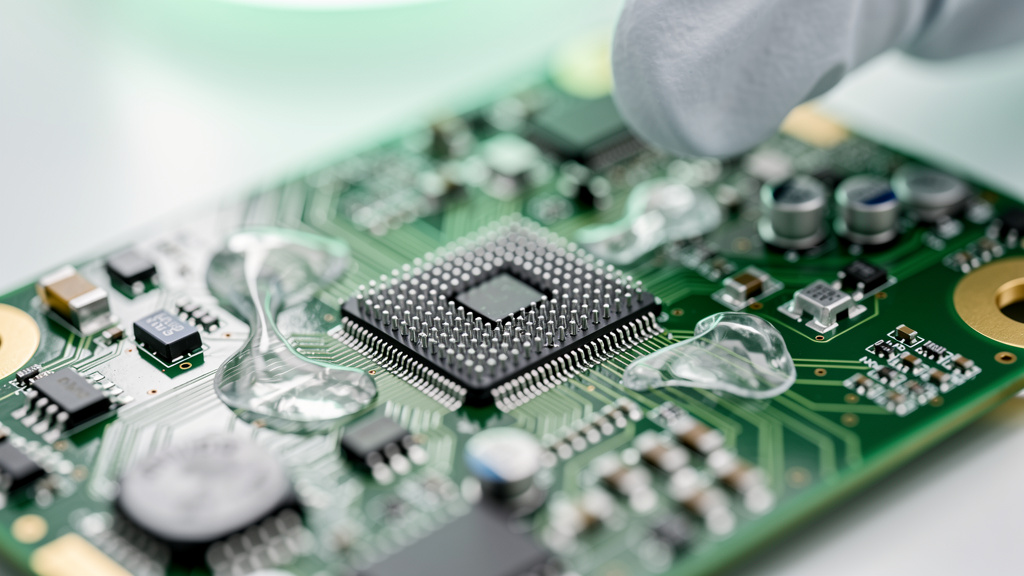
The more consequential specification is the C1X modem. Apple’s second-generation cellular silicon recorded peak download speeds of 419 Mbps on AT&T testing — compared with a 169 Mbps median for the iPhone 16e on the same network — while using 30% less energy than the Qualcomm modem in last year’s iPhone 16 Pro. A new privacy feature exclusive to Apple-designed modems, “Limit Precise Location,” reduces the location granularity shared with carriers to neighbourhood-level without degrading signal quality. The modem still lacks mmWave 5G support, limiting it to sub-6 GHz bands.
Hardware additions include MagSafe and Qi2 wireless charging at 15W — a significant jump from the iPhone 16e’s 7.5W Qi-only capability — and Ceramic Shield 2 glass with three times the scratch resistance of the previous generation. The 48MP single rear camera now captures depth information for portraits of pets as well as people. The 6.1-inch OLED display retains a 60Hz refresh rate and the traditional notch rather than the Dynamic Island found on the standard iPhone 17.
Reviewer reception has been mixed in a specific way. MacRumors called MagSafe a “huge” addition. CNET described the compromises as not “too glaring” for budget-conscious buyers. The Verge’s recommendation was blunter: “Good, but you probably shouldn’t buy it” — advising the additional $200 for the standard iPhone 17’s ProMotion display, Dynamic Island, and ultra-wide camera.
Wall Street was more straightforward. Goldman Sachs reiterated its Buy rating on Apple, citing the pricing strategy specifically. Evercore ISI maintained an Outperform rating with a $330 price target. Apple’s most recent quarter saw iPhone revenue hit $85.27 billion, a 23.3% year-over-year increase — the company’s highest iPhone quarter on record.
The device ships with iOS 26.3 in black, white, and a new soft pink finish.
The Angle
The interesting number in the iPhone 17e spec sheet is not the A19’s benchmark improvement or the doubled storage. It is the 30% energy reduction in the C1X modem compared with the Qualcomm chip it replaced. That is the number that tells you where Apple’s actual investment thesis sits — not in what the phone does for the user today, but in what Apple’s own silicon does to Apple’s dependency structure over the next decade.
Apple held the price at $599 while DRAM and NAND costs climbed. It absorbed the margin pressure rather than pass it through. This is not generosity. It is market-share arithmetic in the markets where the next billion smartphone upgrades will happen — India, Southeast Asia, Latin America — where $599 is already a stretch and $649 would have been a different conversation entirely. The India manufacturing shift is the same calculation expressed in logistics rather than pricing.
The reviewers are correct that the 60Hz display and absent Dynamic Island make the $200 gap to the iPhone 17 look narrow. But that analysis assumes the buyer considering an iPhone 17e is also considering an iPhone 17. Apple’s actual target is the person carrying an iPhone 11 or 12, offered up to $400 in carrier trade-in credit, for whom the alternative is not the iPhone 17 but continued non-upgrade. The product is shaped less by the spec sheet above it than by the installed base below it.
What accumulates quietly beneath the launch-day coverage is the modem story. Two generations in, Apple’s cellular silicon is now faster than Qualcomm’s equivalent at meaningfully lower power draw, and it carries a privacy capability that Qualcomm cannot replicate because it requires architectural control of the modem stack. The C1X does not appear in Apple’s marketing with the weight it probably deserves. The company that designed its own processors, its own GPUs, and now its own modems is methodically eliminating every point where its hardware depends on someone else’s engineering priorities. The phone is a product. The modem is a strategy.