 Promethean
The Brief
An Israeli airstrike struck a primary healthcare centre in Borj Qalaouiye, southern Lebanon, on Friday evening, killing 12 doctors, paramedics, and nurses who were on duty. The WHO confirmed 14 health workers were killed across southern Lebanon within 24 hours, as the total Lebanese death toll since March 2 surpassed 773, with at least 26 paramedics among the dead.
The Report
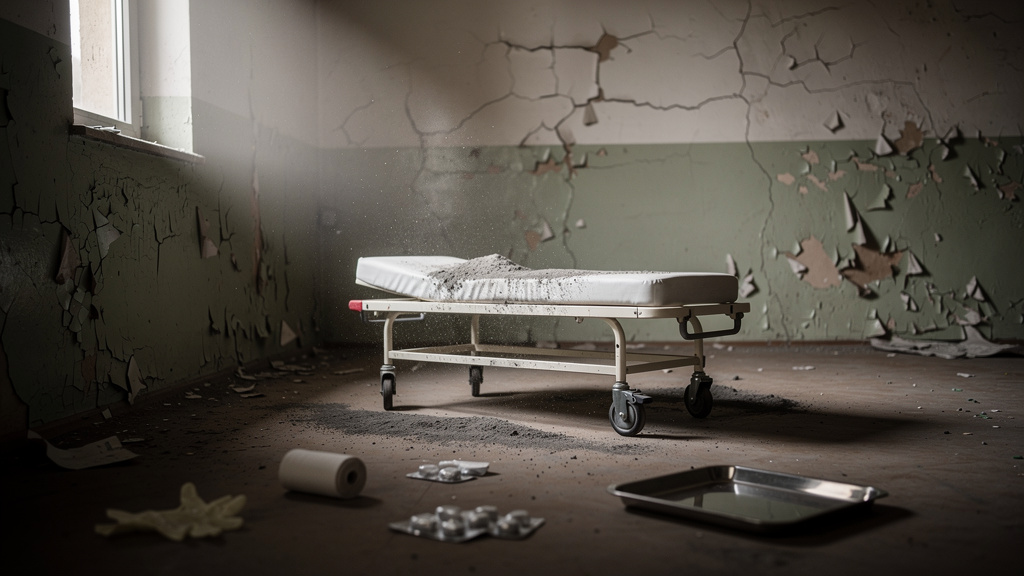
Twelve medical workers were killed Friday evening when an Israeli strike hit a healthcare centre in Borj Qalaouiye, a town in the Bint Jbeil district of southern Lebanon. The dead included doctors, paramedics, and nurses on duty at the facility. One healthcare worker was wounded, and rescue crews were searching for four people still missing from the site.
The strike was followed within hours by a second attack on a paramedic centre in the nearby village of Al-Sowana, killing two more paramedics and wounding five. Separately, a strike on Sidon killed four people, and a family of six — a couple and their four children, including a baby — died in a strike on their home in Nabatieh. WHO Director-General Tedros Adhanom Ghebreyesus confirmed 14 health workers killed in southern Lebanon over 24 hours, bringing the number of WHO-verified attacks on healthcare since March 2 to 27.
Lebanon’s Health Ministry condemned the attack, stating that Israeli forces had “repeatedly targeted ambulance crews while they were carrying out rescue missions” and that strikes had, for the first time since October 2023, hit Lebanese Red Cross personnel. The ministry reported 773 people killed and 1,933 wounded since Israel expanded its campaign on March 2, with at least 103 children among the dead and more than 800,000 displaced. The ICRC had issued an urgent call to protect medical workers just two days earlier, after Lebanese Red Cross volunteer Youssef Assaf died from injuries sustained during a rescue operation in Tyre.
Israel’s Arabic-language military spokesperson, Avichay Adraee, claimed Hezbollah was “using ambulances extensively for military purposes” and warned Israel would “act in accordance with international law” against such activity. The Israeli military said it was looking into the Borj Qalaouiye incident specifically but did not provide evidence linking the facility to military operations. The healthcare centre belongs to the Islamic Health Society, which provides medical services to an estimated two million civilians across Lebanon’s Shiite population and which Israel-linked research centres describe as having ties to Hezbollah’s military wing. Amnesty International has previously stated it found no evidence that such facilities or vehicles were being used for military purposes at the time of documented attacks.
The broader conflict — now fifteen days old — began when Hezbollah launched rockets at Israel following the killing of Iranian Supreme Leader Ali Khamenei in the joint US-Israeli Operation Epic Fury on February 28. France offered to host ceasefire talks in Paris, with President Macron demanding both sides cease operations. UN Secretary-General Guterres, in Beirut, said Lebanon had been “dragged into” the war. Nearly 14 percent of Lebanese territory is under Israeli evacuation orders, and humanitarian organisations expect displacement to reach 1.5 million — roughly a quarter of the country’s population.
Israeli Defence Minister Israel Katz stated that Lebanon would “pay increasing costs through damage to infrastructure and loss of territory” until Hezbollah is disarmed. Israel also destroyed a bridge over the Litani River, described by its military as a key Hezbollah crossing — its first acknowledged strike on civilian infrastructure during this escalation.
The Angle
The pattern is now specific enough to require a name more precise than escalation. Twenty-seven verified attacks on healthcare in twelve days is not collateral damage distributed by the randomness of war. It is the systematic degradation of a country’s medical capacity — the infrastructure that keeps a civilian population functional under bombardment.
Israel’s stated justification — that Hezbollah embeds military assets in medical facilities — may in individual cases be true. Hezbollah’s operational integration with civilian institutions is well-documented in structure if not always in specific instance. But the justification has a structural problem that matters more than any individual case: it converts every healthcare facility in southern Lebanon into a conditional target, where the condition is determined solely by the striking party and verified by no one before the strike lands. The claim does not need to be false to be functionally indistinguishable from a policy of targeting medical infrastructure. It only needs to be unverifiable in advance.
What is disappearing from southern Lebanon is not just individual medics. It is the system that makes organised civilian life possible under fire — the ambulance that arrives, the clinic that stays open, the nurse who does not flee. Thirty paramedics dead in two weeks removes not just those individuals but the willingness of anyone else to do that work in that place. A healthcare system does not need to be destroyed building by building. It only needs to be made too dangerous to operate. The effect is the same. The method is more efficient.
The diplomatic responses — Paris talks, Guterres in Beirut, statements of concern — are calibrated to a conflict that is assumed to have a negotiated endpoint. Whether that assumption survives the next two weeks will depend less on what is said in capitals than on what remains standing in the places where no one is listening.