 Promethean
The Brief
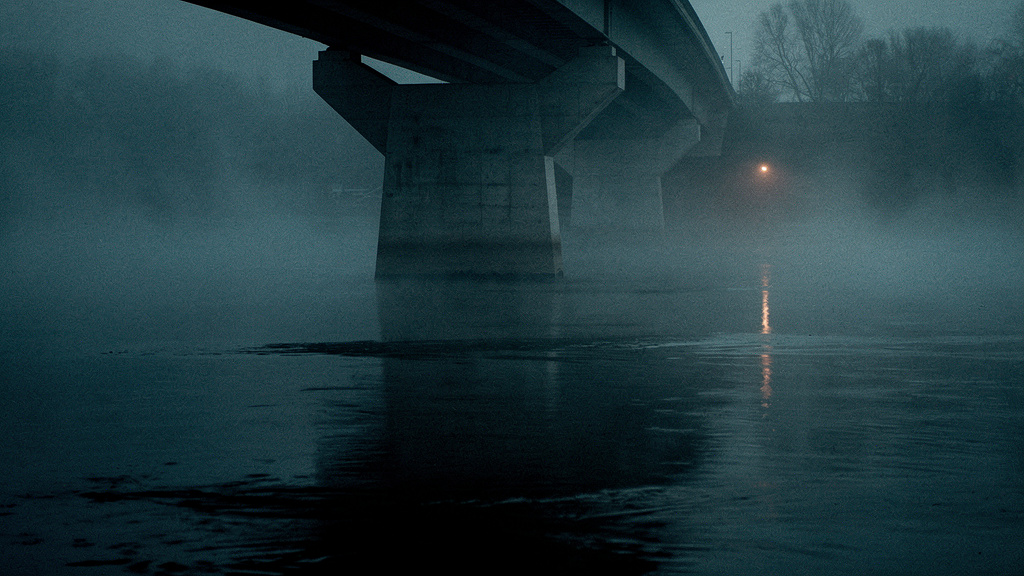
Israeli forces destroyed the Zrarieh Bridge over the Litani River in southern Lebanon on Friday and expanded airstrikes into previously untargeted Beirut neighborhoods, marking the first acknowledged Israeli strike on civilian infrastructure in the current campaign. Lebanese health officials report at least 773 people killed — including over 100 children — and more than 800,000 displaced since Israel escalated its offensive against Hezbollah on March 2.
The Report
The Israeli military confirmed it struck the Zrarieh Bridge spanning the Litani River on Friday morning, stating the crossing had been used by Hezbollah fighters moving between northern and southern Lebanon and that militants had positioned rocket launchers nearby. “In order to prevent a threat to Israeli civilians, it was necessary to sever the bridge,” the military said, though it provided no evidence for the claim. The strike is the first time Israel has openly acknowledged targeting civilian infrastructure since the current offensive began.
The bridge’s destruction came alongside an expansion of airstrikes into Beirut neighborhoods that had not previously been hit. A drone struck a residential building in Bourj Hammoud, a northeastern suburb with a significant Armenian community. Separate strikes hit the Jnah and Nabaa neighborhoods in central and southwestern Beirut. In southern Lebanon, nine people were killed in Arki near Sidon — five of them children — and eight died in the nearby al-Fawwar area. An ambulance was struck in Tayr Falsay. In the Bekaa Valley, an airstrike targeting an al-Jamaa al-Islamiya official killed his two sons and critically wounded the man.
Defence Minister Israel Katz framed the infrastructure strike as the beginning of a broader campaign. “The Lebanese government and the Lebanese state will pay an increasing price through damage to Lebanese national infrastructure,” he said. Prime Minister Netanyahu warned Lebanon’s government was “playing with fire” and pledged to “exact a very heavy price from Hezbollah.” IDF Chief of Staff Lt.-Gen. Eyal Zamir declared Lebanon “a co-equal primary front with Iran in the current war,” and Israel’s security cabinet reportedly discussed plans for a wider campaign to control territory south of the Litani.
The Lebanese government, which outlawed Hezbollah’s military wing in a 22-2 cabinet vote on March 2, maintains it cannot enforce disarmament during an active war. Army chief General Rodolphe Haykal warned that deploying troops against Hezbollah risks a sectarian split. Analysis from the Soufan Center concluded that the IRGC — not Hezbollah’s political leadership — exercises effective control over the group’s military decisions, complicating demands that Beirut disarm a militia whose chain of command runs through Tehran.
UN Secretary-General António Guterres arrived in Beirut on Friday, calling for $308 million in emergency humanitarian funding. “They did not choose this war,” he said of Lebanon’s population. “They were dragged into it.” Twelve UN human rights experts, including Special Rapporteur Francesca Albanese, declared Israeli evacuation orders “blatantly illegal” and warned that forced displacement combined with bombardment would constitute war crimes. Israeli evacuation orders now cover approximately 1,470 square kilometres — 14 percent of Lebanon — affecting between 250 and 300 settlements including the cities of Tyre and Nabatieh. Fifty-five hospitals and clinics have been forced to shut.
The current offensive is a front in the broader U.S.-Israel war against Iran that began February 28 following a joint air campaign that killed Iranian Supreme Leader Ali Khamenei. Hezbollah responded by launching rockets and drones at northern Israel, breaking a November 2024 ceasefire. The group continues to fire an average of 100 rockets daily and retains over 1,000 long-range missiles. On Israel’s side, approximately 2,000 people have been injured since the conflict erupted, with 80 wounded in a single Galilee rocket strike this week.
The Angle
The Zrarieh Bridge is a useful object to think about. Not because of its military significance — Hezbollah has operated for decades in terrain far more difficult than a single river crossing — but because of what destroying it communicates. Defence Minister Katz did not frame the strike as a tactical necessity. He framed it as a price. Infrastructure destruction as leverage against a government that has already done what was asked of it — outlawed the militia, seized its financial channels, ordered IRGC personnel deported — and discovered that compliance and safety are not the same thing.
The structural problem is one that no amount of military pressure on Beirut resolves. The Soufan Center’s finding that the IRGC, not Hezbollah’s political wing, controls the group’s military operations means Israel is destroying Lebanese bridges to punish a Lebanese government for failing to disarm an Iranian command structure. The Lebanese cabinet voted 22-2 to ban Hezbollah’s military activities. The two dissenting ministers did not resign. Hezbollah’s own political apparatus appears unwilling to defend the militia’s actions. None of this changes the operative fact: the people who decide when and where Hezbollah fires are not in Beirut. They are — or were — in Tehran.
What is emerging is not a war between Israel and Hezbollah in any contained sense. It is the systematic degradation of a state that was already fragile, conducted under the logic that a country can be held responsible for an armed force it does not command. The leaflets dropped on Lebanese civilians — “In light of the great success in Gaza, the newspaper of the new reality arrives to Lebanon” — are not ambiguous about which precedent is being applied. Eighty-one percent of structures in Gaza have been damaged or destroyed. The question of whether southern Lebanon follows that trajectory is no longer hypothetical. It is a matter of pace.
Guterres arrived in Beirut on Friday. He called for solidarity. He requested $308 million. The gap between the scale of the diplomatic response and the scale of the military operation is itself the story. Seven hundred and seventy-three dead in eleven days, one in seven Lebanese displaced, 14 percent of the country under evacuation orders — and the international mechanism for responding to this produces a funding appeal and a visit of solidarity. The tool and the problem occupy different orders of magnitude entirely.