 Promethean
The Brief
Japan observed a nationwide moment of silence at 2:46 p.m. on the 15th anniversary of the magnitude-9.0 earthquake and tsunami that killed more than 22,000 people and triggered the Fukushima Daiichi meltdown. Prime Minister Sanae Takaichi attended a memorial ceremony in Fukushima City, pledging to accelerate recovery — while pressing for expanded nuclear power as 26,000 evacuees remain unable to return home.
The Report
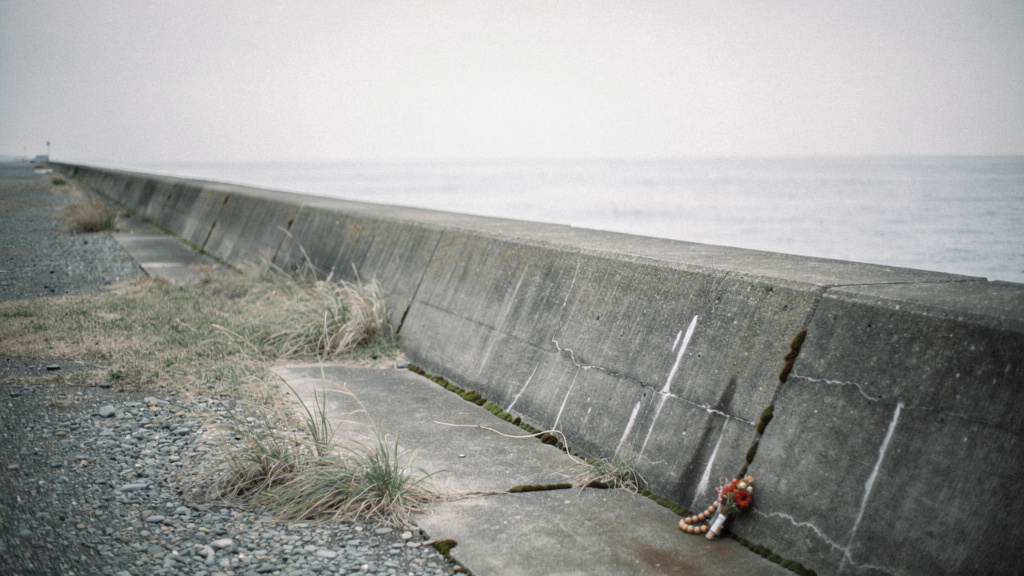
Japan paused on Wednesday to mark fifteen years since the most destructive natural disaster in its postwar history. At 2:46 p.m. — the exact moment the earthquake struck on March 11, 2011 — people across the affected prefectures of Iwate, Miyagi, and Fukushima fell silent. In Natori, Miyagi, where more than 700 died in the Yuriage district alone, residents released some 470 balloons carrying messages to the dead. Along the coast, others walked to the shoreline at dawn to pray for those still missing.
The earthquake and tsunami killed 22,230 people, destroyed over 122,000 buildings, and displaced roughly 470,000. What followed at Fukushima Daiichi — three full reactor meltdowns in the first seventy-two hours — forced 160,000 people to flee radiation. Fifteen years on, approximately 309 square kilometres across seven municipalities remain closed to habitation, and about 26,000 Fukushima evacuees have never returned. Abandoned buildings sit untouched since evacuation, yards overgrown, furnishings still inside. Fields stripped of radioactive topsoil remain barren. Electronic signs along roadways still display real-time radiation readings.
Prime Minister Takaichi, attending the memorial in Fukushima City, pledged to “accelerate the region’s recovery within the next five years” and committed to reinforcing the “valuable lessons” of the disaster. She announced a third reconstruction period beginning in April, running through 2030, focused on long-term revitalisation and a new Disaster Management Agency.
The decommissioning work Takaichi pledged to continue sits at a stark distance from its stated timeline. Of 880 tons of melted fuel debris in the three damaged reactors, robotic trials have retrieved less than four grams. Full-scale removal has been pushed to 2037 at the earliest; the government’s 2051 completion target is widely described as impossible. A volume of slightly radioactive soil equivalent to eleven baseball stadiums awaits disposal. In January, the Supreme Court dismissed nine class-action lawsuits brought by evacuees seeking government compensation.
Yet the same government is accelerating reactor restarts elsewhere. Fifteen of thirty-three operable reactors are now back online, including Reactor No. 6 at the Kashiwazaki-Kariwa plant — the world’s largest nuclear facility — which reached commercial operation in February after a decade offline. Nuclear analysts described the restart as a “major turning point,” signalling the end of Japan’s post-Fukushima stalemate. Takaichi has pledged next-generation reactors and new public funding to push nuclear from 9% of Japan’s electricity to 20% by 2040. Public support for restarts has reached 51%, up from 28% in 2013 — though nearly 40,000 people signed a petition opposing Kashiwazaki-Kariwa specifically, and Niigata’s governor noted that many residents still harbour “distrust toward the operator.”
Kyoko Tadokoro, 72, who lost her daughter Megumi in the tsunami, stood among the mourners in Iwanuma. “I think I can start to move on,” she said. Fifteen years is a long time to carry something. For 26,000 people, it has not yet been long enough to put it down.
The Angle
The juxtaposition is almost too neat — a prime minister pledging lessons learned from a nuclear catastrophe while in the same breath accelerating the technology that produced it. But neatness is not the same as contradiction, and the interesting thing about Japan’s nuclear reversal is how little it has to do with forgetting Fukushima and how much it has to do with a quieter calculation the anniversary coverage tends to obscure.
Japan imports virtually all of its fossil fuels. Offshore wind has underdelivered. The country sits on the Pacific Ring of Fire, has no domestic oil or gas to speak of, and faces energy costs that compress every industry dependent on stable supply. The question the government has answered — not recklessly, but over four years of incremental policy shifts since the 2022 reversal — is not whether nuclear is safe. It is whether the risk of nuclear is larger or smaller than the risk of energy dependence in a century where supply chains are increasingly leveraged as diplomatic weapons. That framing does not appear in the memorial coverage, but it is the framing that produced the policy.
What the anniversary does expose, usefully, is the distance between institutional tempo and human tempo. The government can reverse a phase-out policy, restart reactors, announce next-generation designs — all within a political cycle. The 880 tons of melted fuel inside Fukushima Daiichi do not operate on political cycles. Four grams retrieved in two years. A completion target three decades away that no one believes. Soil enough to fill eleven stadiums, with nowhere agreed to put it. The machine that makes energy policy moves at one speed. The machine that cleans up after energy policy moves at another. Japan is currently running both, and the gap between them is not a detail. It is the entire structural story the next fifteen years will be measured against.