 Promethean
The Brief
The Milan Cortina 2026 Winter Paralympics reach their midpoint on Day 5, with six medal events in Para cross-country skiing at Val di Fiemme and the inaugural wheelchair curling mixed doubles gold-medal match between China and the Republic of Korea in Cortina d’Ampezzo. China leads the overall medal table with 17 medals from over 600 athletes competing across six sports through March 15.
The Report
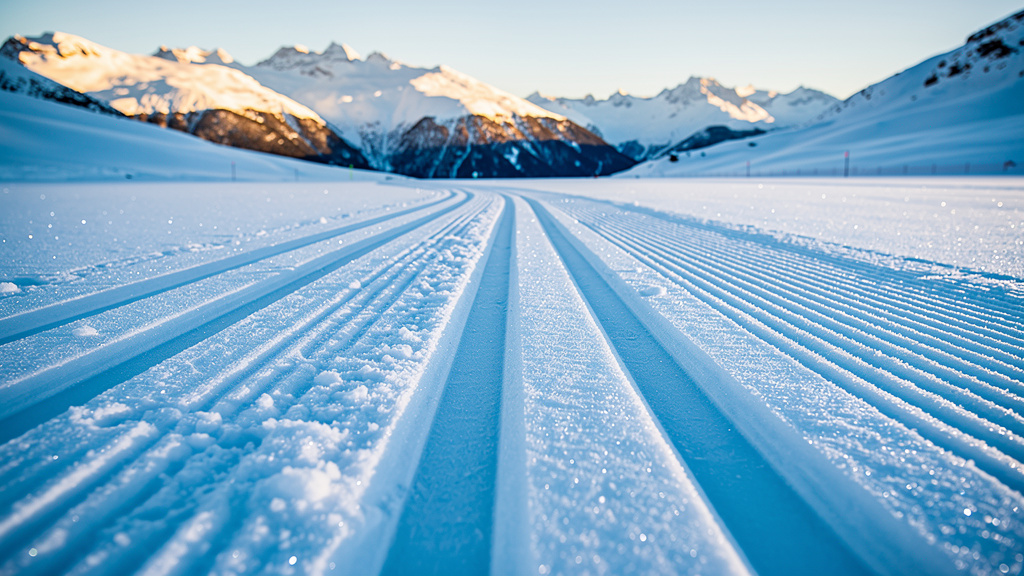
Day 5 of the Milan Cortina Paralympic Winter Games brings the tournament’s busiest cross-country skiing programme yet, with men’s and women’s 10km interval-start races across sitting, standing, and vision-impaired categories at the Tesero Cross-Country Skiing Stadium. The afternoon session features wheelchair curling’s first-ever Paralympic mixed doubles medal matches at the Cortina Curling Olympic Stadium.
China’s Meng Wang and Jinqiao Yang face the Republic of Korea’s Hyejin Baek and Yongsuk Lee for gold after dominant semifinal runs. China defeated 2023 World Champions Latvia 8–3, while Korea upset the United States 6–3, capitalising on a decisive sixth-end steal after Baek executed a precision draw on their Power Play. Latvia and the USA contest the bronze. The mixed doubles format makes its Paralympic debut twenty years after wheelchair curling entered the programme at Torino 2006.
Yang, 24 and the youngest competitor in the draw, called the final “very meaningful” ahead of his first Paralympic medal match. Baek, at her second Games, described reaching the final as arriving at “the very place I’d always imagined.” Her partner Lee, competing at his first Paralympics, acknowledged struggling to contain the emotion: “I didn’t think we would make it this far.”
China enters as the established wheelchair curling power, having taken mixed team gold at both PyeongChang 2018 and Beijing 2022. Korea’s path has been less predictable — four wins from seven round-robin matches before their semifinal surge.
The cross-country programme features its own compelling threads. Oksana Masters, who claimed her 11th Paralympic gold and 21st career medal with a come-from-behind sprint victory on Day 4, returns for the women’s 10km sitting race alongside bronze favourite Kendall Gretsch. Italy’s Giuseppe Romele seeks a home medal after failing to qualify in the sprint sitting event. El Salvador’s David Chavez and Jonathan Arias — competing in their country’s first-ever Winter Paralympics — return to the course after respectable debuts that their coach, fighting tears, called “beyond words” given a programme that began just two years ago.
The Games have already produced several milestones. Brazil earned its first Winter Paralympic medal through Cristian Westemaier Ribera’s sprint sitting silver. Host nation Italy has surpassed its entire Beijing 2022 medal haul, reaching nine medals including three golds. The overall competitor field of 611 athletes from 55 nations surpasses the previous record set at PyeongChang 2018.
A rest day follows on March 12, with competition resuming March 14 for the final two days before the Closing Ceremony at the Cortina Curling Olympic Stadium.
The Angle
The midpoint of any competition is mostly administrative — a line on a schedule. What makes this one worth noting is the peripheral details rather than the medal races. A 24-year-old Brazilian who was introduced to Nordic skiing through a development programme at age 13 stood on a Winter Paralympic podium eleven years later, crying because, as he put it, he realised his dream came true. Two athletes from El Salvador — a country whose climate is the precise opposite of cross-country skiing conditions — trained for two years to finish in the bottom third of the field and were met with tears of pride from their coach. These are not the stories that lead the medal table. They are the stories that explain why the medal table exists at all — as scaffolding for the rarer thing underneath, which is people deciding that the boundary of what is available to them is not yet where it should be.