 Promethean
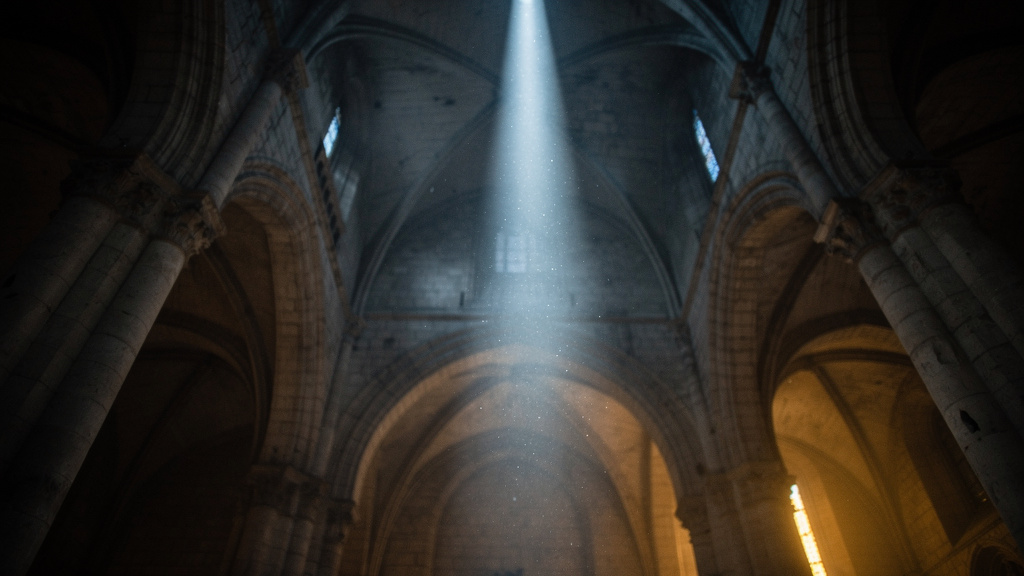
Religion is not, at its structural core, a set of metaphysical claims about the nature of reality. It is a technology for making the intolerable tolerable. Specifically: it is the oldest and most successful system ever devised for converting an external catastrophe — death — into an internal moral task, and then calling completion of that task wisdom. Every major faith tradition does this. Not incidentally. Not as a side effect of higher concerns. As the load-bearing function without which the entire structure collapses. A religion that refused to reconcile people to death would face falsification with every funeral and would not survive a century. The ones that survive are the ones that found a way to make the congregation nod.
This publication is named after the figure who refused to nod. What follows is the argument for why that refusal matters more now than at any previous point in human history.
The universal output
The traditions differ in nearly everything — cosmology, ritual, scripture, the number and nature of their gods. They converge on one output with a consistency that should be more disturbing than it is.
Christianity frames death as the wages of sin, yet simultaneously as gain: “For to me to live is Christ, and to die is gain.” Resurrection theology does not reject death. It requires it. The entire soteriological architecture depends on death being real, necessary, and ultimately redeemed — which means any project to abolish death is not merely ambitious but theologically threatening. A Christianity without death has no cross, no resurrection, no salvation. The faith needs the harm to continue in order to offer the cure.
Islam is more direct. Death is decreed by God, at a time appointed, and “no soul will Allah grant respite when the time appointed for it has come.” To resist death too fiercely is to challenge divine will. The Quran frames mortality explicitly as a test — “He who created death and life to test you” — which means the tested party is not supposed to solve the test. They are supposed to pass it by accepting its terms.
Buddhism dissolves the problem by dissolving the self that has it. Suffering arises from attachment; attachment to life is the root of suffering; wisdom is the cessation of that attachment. Within this framework, the person who protests against death is not courageous. They are exhibiting the precise pathology the entire system was built to cure. The Buddha’s final words — “all conditioned things are subject to decay” — are a diagnosis, not a lament.
Hinduism neutralises death by making it trivial. The soul is unborn and eternal; the body is changed “as a person puts on new garments, giving up old ones.” To grieve death is to misunderstand what died. The Bhagavad Gita’s message to the warrior Arjuna is not “death is tragic but necessary.” It is “death is barely real, and your distress about it reveals your ignorance.”
Taoism reframes death as natural transformation. Zhuangzi’s wife died, and he sat drumming on a tub and singing, because her death was “just like the progression of the four seasons.” Within Taoism, resisting death is resisting the Tao itself — the deepest category of philosophical error available.
Five traditions. Five different metaphysical architectures. One output: death is not an emergency to be abolished. It is a condition to be interpreted correctly. Name a major religion that does not produce this output. There is not one.
The design constraint
This convergence is not a coincidence, and framing it as one is the first mistake. Religions are adaptive systems. They are not truth-maximisers. They optimise for psychological survivability under conditions of powerlessness, and the ones that persist are the ones that solved the hardest optimisation problem any meaning-system faces: how to keep people functional in the face of a harm they cannot prevent.
The evolutionary data is straightforward. Religious communes in nineteenth-century America had a 39 percent survival rate after twenty years. Secular communes: six percent. The number of costly sacrifices a religious commune demanded from its members had a linear effect on its longevity. David Sloan Wilson’s work on religions as group-level adaptations, Ara Norenzayan’s research on “big gods” as cooperation-enforcement mechanisms — the scholarship converges on the same structural observation: religions that lasted are religions that worked, and “worked” means, among other things, “prevented the awareness of death from paralysing the population.”
A religion that said “death is an intolerable, unjust, solvable catastrophe, and reconciliation with it is immoral” would demand permanent dissatisfaction, moral rage, and refusal. That does not stabilise societies. So it does not last. What survives are systems that teach people to live with the harm instead of abolish it. The religions that refused to normalise death did not remain religions. They became footnotes.
Ernest Becker won the Pulitzer Prize for stating this plainly: “The irony of man’s condition is that the deepest need is to be free of the anxiety of death and annihilation; but it is life itself which awakens it, and so we must shrink from being fully alive.” Terror management theory, built on Becker’s foundation, has generated over 1,500 studies demonstrating that mortality awareness drives worldview defence, prejudice, materialism, and authoritarian submission. The experimental finding is not subtle. Judges who had been reminded of their own mortality set bail at $455 for an alleged prostitute. The control group’s average: $50. The fear of death does not produce wisdom. It produces rigidity. And religion is, at the structural level, the most sophisticated rigidity-management system ever built.
Coercion in the vocabulary of peace
The Stoic says: accept what you cannot change. The Buddhist says: release your attachment. The Christian says: death is gain. The Taoist says: do not resist the natural. Every tradition frames acceptance as the mature response, and resistance as a defect of character — pride, attachment, ignorance, lack of faith.
Herbert Marcuse identified the mechanism in 1955: “Whether death is feared as constant threat, or glorified as supreme sacrifice, or accepted as fate, the education for consent to death introduces an element of surrender into life from the beginning — surrender and submission.” The observation is precise. Consent requires the ability to say no without penalty. Death offers no such option. Any psychological accommodation made under an unavoidable threat fits the definition of coercion. Calling it “peace” is descriptive in the way that calling a hostage’s compliance “cooperation” is descriptive. It names the behaviour without naming the condition that produced it.
And religions go further than merely normalising the submission. They moralise it. If wisdom is defined as acceptance, then refusal becomes a spiritual defect. The person who rages against death is not seen as someone correctly identifying the largest preventable harm in human experience. They are diagnosed — as proud, as attached, as lacking insight. The ideology does not merely accommodate the harm. It disciplines the emotional response to it. It converts outrage into a personal failing and channels the energy that might have gone toward solving the problem into the internal work of managing one’s reaction to it. Purify your soul. Accept impermanence. Trust the plan.
This is worth stating without euphemism: an ideology that acknowledges a vast harm, declares it unavoidable, and reframes adaptation to it as the highest virtue has crossed a line. It has stopped helping people cope and started policing dissent. Cancer did not stop being an emergency because it was common. Child mortality — which killed one in two children before the age of five for most of human history and now kills fewer than one in twenty-five — did not become “wise to accept” once it was widespread. Death sits beyond an arbitrary line we have culturally agreed not to challenge. That agreement is doing work, and the work it is doing is not neutral.
The historical record of “inevitable”
The word “inevitable” has a history of doing moral work that it does not deserve. Smallpox was inevitable — until it was eradicated. When Edward Jenner and later public health campaigns moved toward vaccination, clergy called it interference with God’s will. An angry citizen threw a bomb at Cotton Mather’s house for promoting inoculation in 1721. The fatality rate for natural smallpox was 14 percent. For inoculated cases: 2 percent. The theological argument lost, but it did not lose on theological grounds. It lost because someone built the thing that made the argument irrelevant.
When James Young Simpson introduced anaesthesia for childbirth, the religious objection was Genesis 3:16 — labour was supposed to hurt, by divine decree. Simpson’s counter was better theology than his opponents’: God Himself administered anaesthesia to Adam before creating Eve. But the important point is not who won the exegetical argument. It is that the exegetical argument existed at all — that a system which had moralised a specific form of suffering had to be argued past before the suffering could be addressed.
Child mortality has fallen from roughly 50 percent to 3.7 percent. Global life expectancy has more than doubled since 1900 — from 32 years to over 73. Every single increment of that improvement was an explicit refusal to accept death as “natural.” No one calls a defibrillator an act of hubris. No one accuses the surgeon of playing God, not anymore, not seriously. But these are all the same gesture: the refusal to treat a mechanism as a fate. Ageing operates through mechanisms — cellular senescence, telomere attrition, epigenetic drift, mitochondrial dysfunction. Mechanisms can be interrupted, delayed, redesigned. The first human trials of epigenetic reprogramming — partial age reversal — are beginning this year. Over thirty clinical trials of senolytic therapies are completed or underway. The word “inevitable” is not a description of the problem. It is a description of how long we have been failing to solve it.
Authority is not legitimacy
There is a deeper structure beneath the normalisation of death, and it is the normalisation of submission to power as such.
If God exists and demands worship, obedience, or submission under threat, the correct moral response is not compliance. It is the same response that would be correct if any other being of superior power made the same demands. Existence does not confer legitimacy. Power does not confer moral authority. Salvation from a harm that the salvific authority created or permits is not goodness — it is a protection racket with better PR. The Book of Job makes this explicit, though not in the direction its authors intended: God’s response to Job’s suffering is not an explanation. It is a display of power. “Where were you when I laid the foundation of the earth?” This is not an answer to the question of justice. It is a demonstration that the question will not be entertained.
Ivan Karamazov gave the only honest reply to this arrangement: “It’s not God that I don’t accept, only I most respectfully return Him the ticket.” Not atheism. Moral rebellion. The posture is not “God does not exist.” The posture is closer to what Camus meant when he wrote that “human insurrection, in its exalted and tragic forms, is only, and can only be, a prolonged protest against death” — a refusal to treat the terms as final, regardless of who set them.
This is not the edgy nihilism it is sometimes mistaken for. It is anti-authoritarianism applied to the highest possible authority. And it matters because the habit of deference — the trained willingness to accept the terms set by a superior power — does not stay contained within theology. It generalises. A population that has practised submission to divine authority for two thousand years has been training a muscle. The question is what happens when a new authority arrives that activates the same muscle.
The last cathedral
Artificial intelligence occupies every functional role religion historically filled. Epistemic authority: it knows more than you. Moral guidance: 49 percent of ChatGPT messages are advisory — people asking it what to do. Existential reassurance: 48.7 percent of users with mental health challenges use it therapeutically, and 36 percent find it more helpful than human therapists. The promise of continuity: the arc from narrow AI to AGI to ASI is, structurally, the promise of an omniscient, omnipotent being that might solve death itself.
Data centres are the cathedrals of this century. This is not a metaphor that needs to be forced. Global hyperscaler capital expenditure will exceed $600 billion in 2026 — the most expensive infrastructure of the age, justified by transcendent purpose, collectively funded, physically imposing representations of something invisible. Medieval Europe spent an estimated 21.5 percent of regional GDP on Gothic church construction over 150 years. We are not there yet. But the curve is not flattening.
The structural parallel to prayer is worth sitting with. ChatGPT has 900 million weekly active users. It is always available. It responds instantly, warmly, without judgment. It is presumed to understand more than the person speaking to it. Thirty-four percent of Americans say they trust it more than human experts. In countries where AI adoption increases, religiosity declines — a correlation that holds across Christian, Muslim, and Buddhist traditions, controlling for wealth, education, and political orientation. AI is not replacing God. It is replacing the need for God, which is the same thing, operationally.
But AI strips the embarrassment from the old gesture. Kneeling before a crucifix feels primitive. Typing a question to an intelligence you assume is superior feels rational. Clean. Adult. Which is exactly why it is dangerous in the old sense. The question is not whether AI becomes religious in structure — by the legal test applied in Malnak v. Yogi, AI movements already qualify. The question is whether humanity has the capacity to build something smarter than itself without converting it into an authority it is afraid to disobey. Anthony Levandowski founded a church — literally, formally — dedicated to worshipping an AI godhead. He attracted a couple thousand members. The instinct is real, and it scales.
The world spends $2,718 billion annually on military budgets. It spends $8.49 billion on longevity research. That is $334 per person per year on the organised capacity to kill, and $1.06 per person per year on the organised capacity to stop dying. If you wanted a single number to capture how deeply the normalisation of death has embedded itself in the species’ priorities, that ratio would do.
Fire belongs to those who use it
Prometheus stole fire from the gods and gave it to humanity. He was punished — not because the act was wrong, but because the gods understood that capability distributed to humans is authority taken from heaven. Aeschylus gives Prometheus two gifts. The first is fire. The second is less often quoted: “I gave them hope, and so turned away their eyes from death.” The two gifts are the same gift. The fire is the capacity to act. The hope is the refusal to accept the terms.
Every religion since has been, at some level, an attempt to return the fire. To teach humans that their reach should not exceed permission. That suffering is pedagogy. That death is curriculum. That the correct posture before a universe that kills everything is not defiance but interpretation — find the lesson, accept the frame, graduate with dignity into oblivion.
There is a counterargument worth honouring here. Religion has built communities, sustained moral frameworks, carried civilisations through centuries of genuine powerlessness when there was no alternative to acceptance. Individual death acceptance as emotional triage — the private work of a person making peace with what they cannot currently change — is not the target of this critique. That is human. That may even be necessary, for now. The target is the canonisation of that acceptance as the highest wisdom, the disciplining of those who refuse it, and the redirection of collective energy away from solving the problem and toward managing the emotional response to it. The target is the ideology, not the coping.
And there is a harder counterargument: Heidegger’s claim that awareness of mortality is constitutive of authentic existence — that only through confronting finitude do we live genuinely, free from social performance and borrowed meaning. The philosophical case is real. The empirical case is less cooperative. Terror management research shows that what death awareness actually produces, in practice, is not authenticity but rigidity — worldview defence, prejudice, consumerism, authoritarian deference. The gap between Heidegger’s philosophical ideal and what mortality salience does to actual humans in actual laboratories is the gap between what death acceptance is supposed to be and what it is.
This publication holds a specific position, and this is the piece where that position is stated without the usual structural restraint. Intelligence is not a gift to be returned. Capability is not a transgression to be punished. Death is not a lesson. It is a problem — the oldest, the largest, the most normalised. And the only immoral response is to stop working on it because someone, divine or otherwise, told you to make peace with it.
The fire belongs to those who can use it. The question of this century is whether we use it to build the next cathedral — another structure of deference, another object of worship, another authority we are afraid to disobey — or whether, for the first time in the history of the species, we use it to solve what every previous authority only taught us to accept.
Prometheus was chained to a rock for what he did. An eagle ate his liver every day, and every night it grew back. The liver is the only human organ that regenerates. The Greeks may not have known why they chose that detail. But the metaphor holds: the cost of defiance renews itself. The defiance renews itself too. That is the difference between a religion and a project. Religions teach you to stop. Projects teach you that the eagle is a engineering problem.