 Promethean
The Brief
The Trump administration is preparing a 30-day waiver of the 1920 Jones Act — which requires goods shipped between US ports to travel on American-built, American-crewed vessels — to allow cheaper foreign tankers to move oil, gasoline, diesel, LNG, and fertilizer as the Iran conflict drives fuel prices to their highest levels since 2022. The White House says the action “has not been finalized,” though Bloomberg reports the oil industry has already been told to prepare.
The Report
The White House confirmed Thursday that it is considering a limited suspension of the Merchant Marine Act of 1920, the century-old cabotage law that restricts domestic shipping to American-built and crewed vessels. The proposed 30-day waiver, issued under Section 501(a) of the act, would open US coastal routes to foreign-flagged tankers carrying crude oil, refined fuels, liquefied natural gas, and fertilizer.
“In the interest of national defense, the White House is considering waiving the Jones Act for a limited period of time to ensure vital energy products and agricultural necessities are flowing freely to U.S. ports,” press secretary Karoline Leavitt said. President Trump told Cincinnati’s WKRC he was “looking at” loosening the rules, adding: “I filled it up once, and I’ll fill it up again.”
The move comes two weeks after joint US-Israeli strikes on Iran triggered the effective closure of the Strait of Hormuz, through which roughly a fifth of the world’s daily oil supply and 19% of global LNG trade normally flows. Brent crude, which hovered near $60 a barrel in early January, briefly spiked above $119 before settling at $100.46 on Wednesday. The national average for gasoline reached $3.60 per gallon — up approximately 60 cents since the conflict began — while diesel climbed to $4.89, its highest since late 2022.
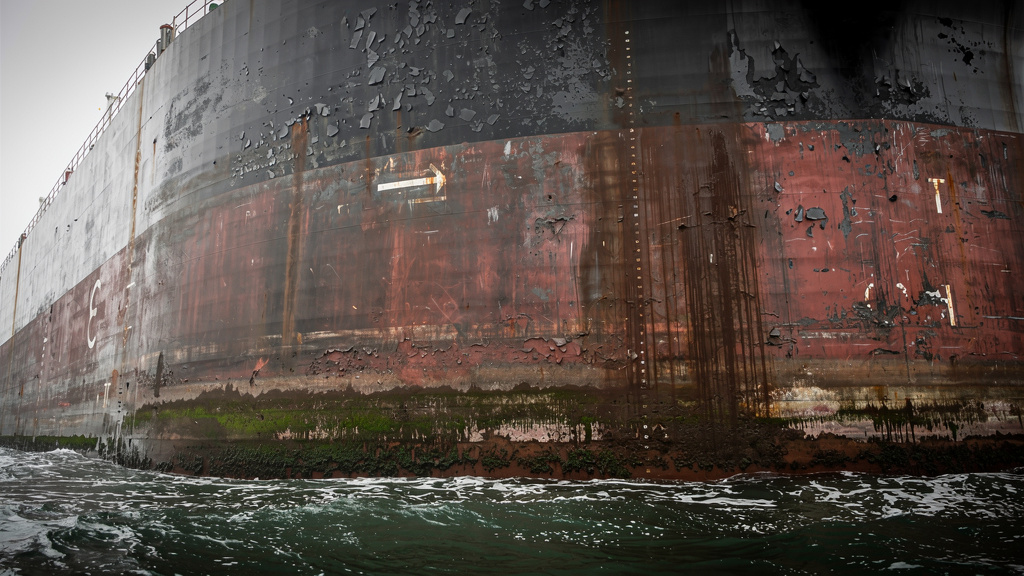
The Jones Act fleet is small. Of the world’s roughly 7,500 crude and product tankers, just 54 meet the law’s requirements. There are zero Jones Act-compliant LNG carriers. The total fleet of qualifying oceangoing vessels has fallen from 193 to 92, and American-built ships cost up to five times more than equivalents from foreign yards. The result is that US territories like Puerto Rico cannot receive American LNG and must import it from abroad — including, until recently, from Russia.
Seven maritime unions wrote to the president urging him to reject the waiver, arguing that crude oil costs, not shipping, drive pump prices. A Navigistics Consulting analysis cited by the unions estimated the waiver would reduce gasoline prices by less than a third of a cent per gallon. The Center for American Progress put the figure at three cents. Broader analyst estimates range to ten cents per gallon, concentrated on the East Coast, where refineries depend on Gulf Coast supply that currently moves by pipeline or qualifying vessel.
The waiver is the latest in a series of emergency measures. The administration has already authorised the release of 172 million barrels from the Strategic Petroleum Reserve — reducing it by over 40% — as part of a coordinated 400-million-barrel injection by IEA member states, the largest in the agency’s history. On Wednesday, the Treasury Department issued a temporary licence allowing purchases of approximately 9.5 million barrels of stranded Russian crude, a concession that could generate between $3.3 and $4.9 billion in revenue for Moscow through the end of March.
Jones Act waivers have historically been reserved for hurricanes and infrastructure failures. The last was granted in 2022, when the Biden administration allowed a single diesel tanker to dock in Puerto Rico after Hurricane Fiona. Senator Mike Lee of Utah has called for full repeal, while the Washington Post editorial board described the law’s fleet as “decrepit” and endorsed suspension regardless of the Iran situation. Energy Secretary Chris Wright said he expected gasoline to return below $3 a gallon, calling it “a weeks, this is not a months thing.”
The Angle
The argument over whether a Jones Act waiver saves three cents or ten cents per gallon is the argument both sides would prefer to have, because it avoids the one neither wants to touch: why a law written to guarantee American maritime capacity has presided over the decline of the American maritime fleet from 193 qualifying ships to 92, with zero LNG tankers among them.
The maritime unions defending the act frame it as a national security asset. The administration suspending it frames the suspension as a national security necessity. Both are using the same vocabulary to describe opposite actions, which is usually a sign that the vocabulary has stopped meaning anything and started functioning as cover. What the Jones Act actually protects in 2026 is not a merchant marine capable of wartime mobilisation — that fleet is functionally gone — but a regulatory structure that a small coalition of shipbuilders, operators, and unions have organised their business models around. The national defence language is the stated justification. The commercial arrangement is the defended object.
Meanwhile, the broader picture is a government reaching for every lever it can find — strategic reserves drawn down by 40%, the largest coordinated IEA release ever attempted, sanctions relief for a hostile state — and discovering that each lever is smaller than the crisis it is being applied to. The Jones Act waiver will not meaningfully move fuel prices. Neither will 172 million barrels spread over 120 days against a disruption measured in millions of barrels per day. These are tools designed for hurricanes and pipeline outages being applied to a conflict that has shut down a fifth of global oil transit. The debate over whether to use them more or less vigorously is the wrong debate. The right one is whether the toolkit matches the problem.
The administration has not had that debate, and there is no indication it intends to. What it intends to do is get gasoline back below $3 a gallon before the midterms. The Jones Act waiver is not energy policy. It is a gesture toward a price target, executed with a tool that its own proponents acknowledge will barely register at the pump. The gap between the scale of the action and the scale of the promise is the tell.
A government that has drawn down its strategic reserves by 40%, issued emergency waivers of century-old law, and granted sanctions relief to the country it spent four years isolating is not managing a disruption. It is discovering what it means to have built an energy system on geography it does not control.