 Promethean
The Brief
Heavy overnight airstrikes hit Isfahan, Shiraz, southern Tehran, and multiple Iranian air bases on Sunday, killing at least 15 workers at an Isfahan heating-equipment factory as the U.S.–Israel war on Iran entered its sixteenth day. The conflict’s death toll has surpassed 2,400 across twelve countries, with Israel’s military confirming plans for at least three more weeks of operations.
The Report
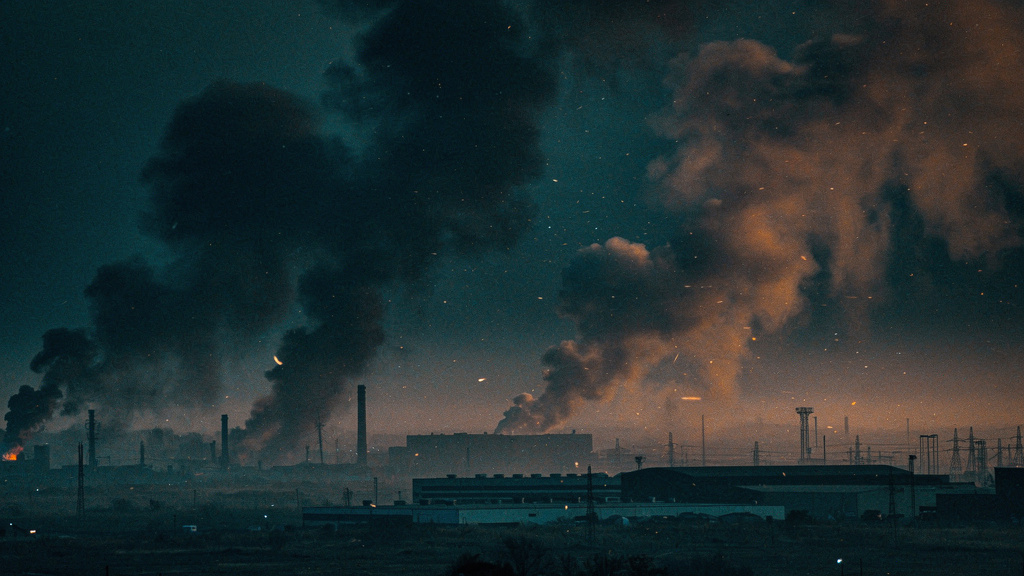
U.S. and Israeli forces intensified strikes across Iran overnight Sunday, hitting targets in Isfahan, Shiraz, southern Tehran, and Hamadan province in what the IRGC described as one of the heaviest bombardments since the war began on February 28. An Israeli Air Force strike on government infrastructure in Hamadan targeted several IRGC command centres and Basij headquarters.
The deadliest single strike killed at least 15 workers at an Isfahan factory producing heating and cooling equipment. Saturday is a working day in Iran; the factory was fully staffed. Iran’s Ministry of Health now reports 1,444 killed and more than 18,500 wounded since the campaign began. Tehran’s governor says at least 10,000 residential homes have been damaged or destroyed. Iran’s Ministry of Culture reports 56 museums and historic sites damaged, with UNESCO confirming four of Iran’s 29 World Heritage Sites affected — including the 17th-century Naqsh-e Jahan Square in Isfahan and the Golestan Palace in Tehran.
Iran continued retaliating across the region. The IRGC launched its declared 50th wave of strikes against U.S. bases in the UAE, Bahrain, and Kuwait, and fired seven ballistic missile salvos at Israel since midnight alone. Some missiles now carry cluster munitions. Hezbollah fired rockets and drones alongside the Iranian salvos, activating sirens across the Galilee. Gulf states absorbed another night of attacks: the UAE has now intercepted 298 ballistic missiles, 15 cruise missiles, and 1,606 drones since the war began. Saudi Arabia intercepted drones over Riyadh and the Eastern Province. Kuwait reported three soldiers wounded after two missiles struck the perimeter of Ahmad al-Jaber airbase.
IDF spokesperson Brigadier General Effie Defrin told CNN that Israel intends to continue operations for at least three more weeks — through Passover — with “thousands of targets” remaining. “We are not working according to a stopwatch, or a timetable, but rather to achieve our goals,” Defrin said. The stated objective: to “weaken the Iranian regime severely.” Reports that Israel is running critically low on ballistic missile interceptors drew a flat denial from IDF sources, who said the military “prepared for a lengthy war.”
President Trump told NBC that Iran “wants to make a deal” but the terms “aren’t good enough yet.” Iran’s Foreign Minister Abbas Araghchi offered a direct contradiction: “We never asked for a ceasefire, and we have never asked even for negotiation.” Araghchi said the war would end “when we are certain it will not be repeated and that reparations will be paid.” Trump’s call for an international naval coalition to reopen the Strait of Hormuz — naming China, France, Japan, South Korea, and the UK — has drawn no public commitments. Japan’s foreign ministry responded that “Japan decides its own response, and independent judgment is fundamental.”
The war has cost approximately $16.5 billion in its first twelve days. Crude oil prices have surged more than 40 percent since fighting began, with Brent crude peaking at $119.50 per barrel. The IEA has released 411.9 million barrels from emergency reserves. Pope Leo XIV called for an immediate ceasefire. A UN Security Council resolution condemning Iran’s retaliatory strikes on Gulf states passed 13–0 with two abstentions. A separate Russian-sponsored ceasefire resolution failed.
The total death toll across all twelve affected countries now stands at approximately 2,497, with more than 24,000 wounded.
The Angle
The gap between the declared state of this war and its observable state is widening by the day. Trump announced on Truth Social that the U.S. had “destroyed 100% of Iran’s Military capability.” Hours later, Iran launched its 50th wave of strikes against American bases. Israel says it has no interceptor shortage and is prepared for a lengthy war. Semafor reports it informed Washington this week that it is running critically low. Iran’s foreign minister says Tehran never asked to negotiate. The president says Iran wants a deal. One of these is true.
What is clear is that sixteen days into a campaign that has killed nearly 2,500 people across twelve countries, displaced 3.2 million Iranians, and pushed oil past $119 a barrel, neither side has articulated a success condition that the other would recognise as an endpoint. Israel’s stated goal — to “weaken the Iranian regime severely” — is a direction, not a destination. Iran’s condition — that reparations be paid and guarantees given — is a demand designed to be unmet. The Strait of Hormuz remains functionally closed, and the coalition Trump has called for to reopen it does not exist. Japan’s polite refusal to dispatch warships was the most diplomatic way of observing that the countries being asked to solve this problem did not create it.
Wars acquire their own logic. The IDF is planning through Passover with contingencies beyond. The IRGC is counting its waves. The Gulf states — six dead in the UAE, six in Kuwait, two in Bahrain, three in Oman — are absorbing costs from a war they did not enter and cannot leave. Sixteen days in, and the question that should be straightforward — what does this end looking like — is the one nobody with the authority to answer it appears willing to ask.