 Promethean
The Brief
Ukrainian President Volodymyr Zelensky accused Hungary and Slovakia of “blackmail,” saying the two EU members are conditioning weapons deliveries and a €90 billion loan package on Ukraine’s reopening of the Druzhba oil pipeline — damaged by a Russian drone strike in January and requiring an estimated six weeks of wartime repairs. The European Commission has proposed an inspection mission to assess the pipeline’s condition, but Ukraine has not yet responded to the formal request.
The Report
Zelensky used remarks released Sunday to characterise European pressure over the Soviet-era Druzhba pipeline as coercion, stating he personally opposes restoring Russian oil flows but is “powerless” if the price of refusal is the loss of military aid. “I told our friends in Europe that this is called blackmail,” he said.
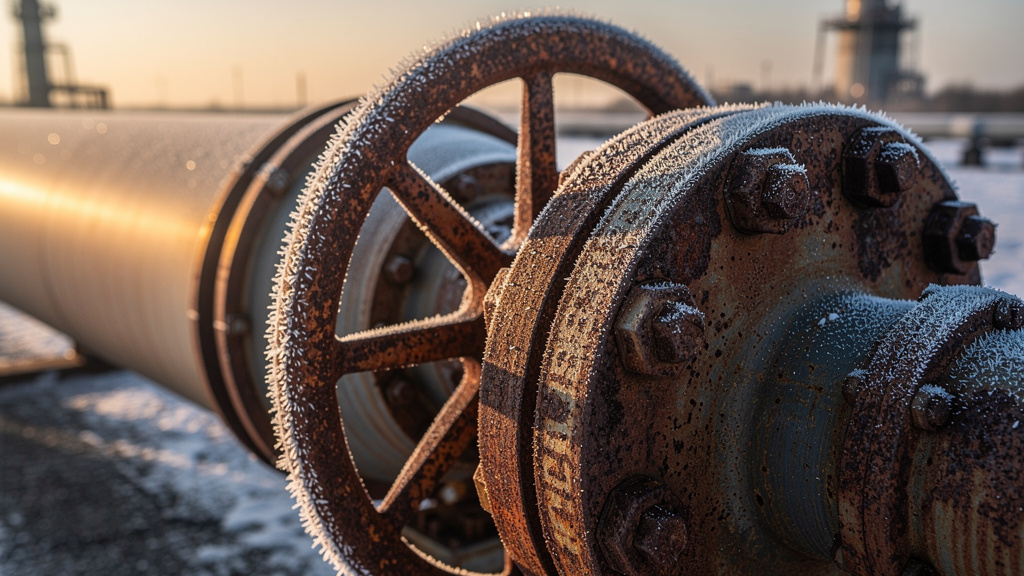
The dispute traces to January 27, when a Russian drone struck the Brody pumping station in western Ukraine — the country’s most powerful oil transit facility, built in the 1960s with nearly two dozen storage tanks. A fire at the site burned for more than ten days. Ukraine’s foreign ministry declared force majeure. Bloomberg data confirmed zero Russian oil deliveries to Hungary or Slovakia in February, down from an average of 150,000 barrels per day.
Hungary and Slovakia, the last EU members importing significant volumes of Russian crude by pipeline, responded with escalating retaliatory measures. Budapest blocked the €90 billion EU loan package, halted gasoline and diesel exports to Ukraine, and vetoed a new round of sanctions against Russia. Slovakia declared an oil emergency, cut emergency electricity supplies to Kyiv, and threatened to obstruct Ukraine’s EU accession. Both countries released approximately 1.8 million barrels each from strategic reserves.
Hungarian Prime Minister Viktor Orbán has vowed to block “every European Union decision that is important to Ukraine” until flows resume, claiming satellite intelligence shows the pipeline remains operational. Slovak Prime Minister Robert Fico echoed this, asserting the damaged section has been repaired and accusing Zelensky of timing restoration to coincide with the aftermath of Hungary’s April 12 parliamentary elections — where Orbán trails opposition leader Péter Magyar in polls.
Zelensky rejected this framing, asking: “Why repair it? So that we lose people?” — citing continued Russian attacks on repair crews. Naftogaz CEO Serhii Koretskyi described systemic damage extending beyond the pipeline itself to pumping units, compressors, and electronic control systems.
The European Commission formally requested inspection access on March 12 in what officials acknowledged was an unprecedented step with no legal precedent. Ukraine has not responded. Meanwhile, Brussels has developed a contingency plan involving €30 billion in bilateral loans from Baltic and Northern European states, should the full package remain blocked. Commission President Ursula von der Leyen stated on March 9 that Ukraine would receive the €90 billion.
Alternative supply routes exist. Croatia’s JANAF pipeline operator confirmed non-Russian crude from Saudi, Norwegian, Kazakh, and Libyan sources is already moving to MOL refineries in Hungary and Slovakia. The Commission assessed no immediate supply risk, citing EU-mandated 90-day strategic reserves. Hungary’s dependence on Russian crude has nonetheless increased from 61 to 86 percent since 2021 — the inverse of the EU trend, which saw Russian imports fall from 26 percent to approximately three.
The Angle
The mutual accusations of blackmail are the least interesting part of this story. What is worth noticing is the structural position each party has built for itself — or failed to.
Russia struck the pipeline that supplies its own allies with discounted crude. The two governments most dependent on that supply blamed not the country that bombed it but the country it was bombed in. This sequence is not complicated to read. Orbán and Fico are leveraging EU institutional mechanisms — the unanimity requirement, the veto — to convert the energy dependency they chose not to reduce into political leverage over the country absorbing the war those dependencies helped fund. Hungary sends roughly €2 billion annually to Moscow for Druzhba crude. It is now holding €90 billion in EU support for the country Russia invaded hostage to the restoration of that same revenue stream. The circularity is difficult to miss once stated plainly.
The more revealing detail is the election calendar. Orbán faces voters on April 12 trailing an opposition candidate who did not exist in national politics two years ago. Fico’s accusation — that Zelensky is timing repairs to land after the Hungarian election — is precisely the kind of charge that reveals more about the accuser than the accused. If the reopening of a Russian oil pipeline is material to who wins a Hungarian election, that fact deserves more scrutiny than anyone involved appears willing to give it.
Brussels, for its part, has responded with the institutional equivalent of buying time: an inspection mission no one has agreed to, a reassurance about 90-day reserves, and a contingency plan that covers a third of the blocked funding. The €30 billion bilateral workaround is the tell. It signals that the EU’s own decision-makers expect the veto to hold — and that the unanimity mechanism designed to protect member sovereignty is functioning, with some precision, as a tool for two governments to protect their energy relationship with the country the rest of the bloc is sanctioning. The tool is performing exactly as designed. Whether it was designed for this is the question no one in Brussels appears eager to answer.